
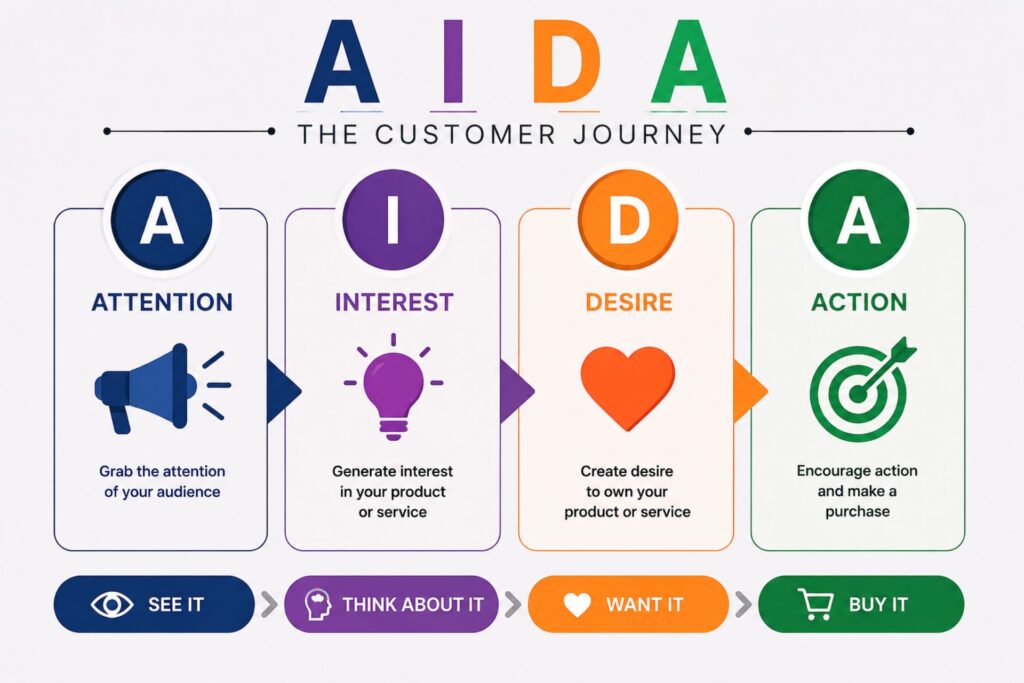
AIDA is one of the most popular marketing frameworks. It explains the journey a customer goes through before buying a product.
A – Attention
First, grab the customer’s attention
Goal: Make people notice your product.
Example
“Want to Lose Weight Without Going to the Gym?”
This headline immediately catches the attention of people looking for an easy fitness solution.
I – Interest
Now make them interested by explaining what makes the product special.
Goal: Keep them engaged.
Example:
“Our fitness app offers personalized workout plans, healthy meal guides, progress tracking, and expert coaching—all from your smartphone.”
Now the audience starts learning how the app can help them.
D – Desire
Create a desire to own the product by showing its benefits.
Goal: Make the customer think, “I need this!”
Example:”Achieve your fitness goals with just 20 minutes of exercise a day. Join thousands of users who have transformed their health and confidence.”
This creates an emotional connection by showing the benefits and success of other users.
A – Action
Encourage the customer to take the next step.
Goal: Get them to act.
Example:”Achieve your fitness goals with just 20 minutes of exercise a day. Join thousands of users who have transformed their health and confidence.”
A clear Call-to-Action (CTA) motivates users to act immediately.
This example clearly demonstrates how each stage of the AIDA model guides potential customers from noticing the product to taking action. It is also suitable for presentations, assignments, and digital marketing case studies.